II.
Biography
A Life in the Law
Lawyer, professor, political strategist, and historian. The arc of Larry S. Gibson's career traces the central legal struggles of the late twentieth century — and the political ascendance of Black America in our own.
Larry S. Gibson’s career began with a conviction common to his generation and rare in its execution: that the law could be a lever for justice if wielded with both rigor and patience. From his earliest years as a student leader at Howard University in the late 1950s and early 1960s, Gibson placed himself in the precise rooms where American civil rights history was being made.
Howard, 1960–1964
Elected President of the Liberal Arts Student Council, Gibson convened students from eight Washington-area colleges to form D.C. Students for Civil Rights. As its chairman, he led continuous on-campus debates and direct lobbying of Congress for passage of the 1964 Civil Rights Act — work that introduced him, while still an undergraduate, to the machinery of federal lawmaking.
“Brother Gibson taught us that the work of justice is patient, technical, and unglamorous — and that this is precisely why it matters.”
H. Patrick Swygert
President Emeritus, Howard University
Columbia Law, 1964–1967
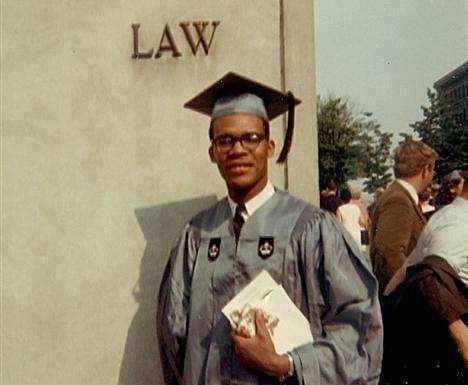
At Columbia Law School, Gibson distinguished himself on the Dean’s List and served as assistant to Professor Albert Rosenthal. Upon graduation he accepted a federal clerkship with Judge Frank A. Kaufman of the U.S. District Court for the District of Maryland — becoming, as the Baltimore News American noted in 1967, the first Black federal law clerk in the South.

Public Service & the Academy
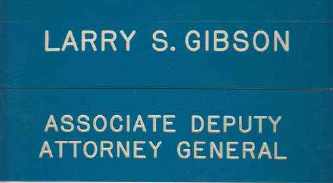
In the 1970s Gibson joined the U.S. Department of Justice as Associate Deputy Attorney General — one of the highest-ranking Black officials in the Department’s history at the time — before turning toward the academy. He became the first Black law professor at both the University of Virginia (1972) and the University of Mississippi (1975), and in 1974 joined the faculty of the University of Maryland School of Law, where he would become its longest-serving professor.
A Strategist Emerges
Even as he taught and practiced, Gibson became one of Maryland’s indispensable political strategists. He served as legal counsel to Parren Mitchell’s historic 1970 congressional run and would, over the next half-century, manage or advise the campaigns of mayors, governors, and members of Congress — culminating in his role as senior advisor to Wes Moore’s 2022 election as Maryland’s first Black governor.
Historian of the Movement
In 1998 Gibson published Young Thurgood: The Making of a Supreme Court Justice, a definitive scholarly account of Justice Marshall’s formative Baltimore years. The book remains a foundational reference for civil rights historians.
Today, after more than half a century of practice, scholarship, and service, Larry S. Gibson continues as Of Counsel to Shapiro Sher Guinot & Sandler in Baltimore — and continues, as he always has, to shape what comes next.