III.
Civil Rights & Legal Work
The Long Fight for Equal Standing
From the Capitol corridors during the 1964 Civil Rights Act to the federal courthouse as the first Black law clerk in the South — a record of advocacy practiced at the highest level.

Chapter One
Lobbying the 1964 Civil Rights Act
As a Howard undergraduate, Gibson founded and chaired D.C. Students for Civil Rights, a coalition of students from eight Washington-area colleges and universities who organized continuous debates and Capitol Hill lobbying in support of the Civil Rights Act of 1964. The coalition’s strategy paired moral testimony with parliamentary patience — the same pairing that would mark his entire career.
“Mr. Gibson is a quintessential lawyer’s lawyer — disciplined, deeply principled, and unwilling to leave any colleague behind.”
Ronald M. Shapiro
Counsel to the Firm, Shapiro Sher Guinot & Sandler
Chapter Two
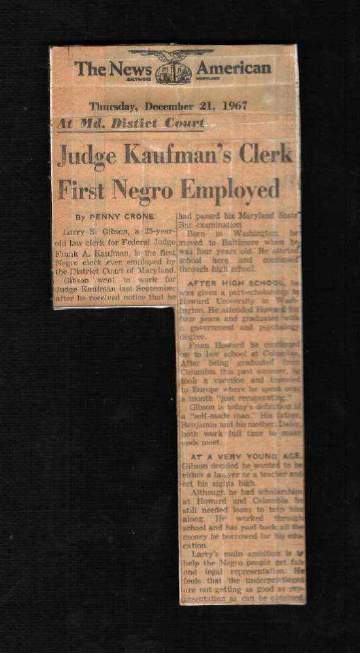
First in the Federal Courthouse
Chapter Three
Civil Rights Litigation
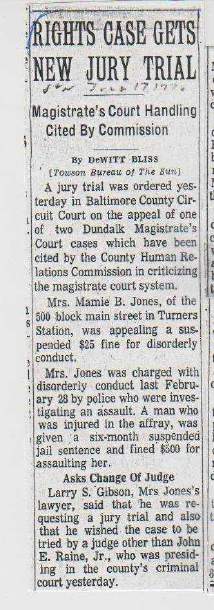
Returning to Baltimore, Gibson built a civil rights practice that ranged from the local — securing a new jury trial for Mrs. Mamie B. Jones after a Dundalk magistrate’s court was cited by the County Human Relations Commission — to matters of national consequence.
Chapter Four
Representing the MLB Umpires
Among his most prominent labor matters, Gibson served as counsel to the Major League Baseball Umpires Union — a role that placed him at the intersection of professional sports, labor law, and the public square.

Chapter Five
A Career of Counsel
Since 1987, Gibson has been Of Counsel to the Baltimore firm Shapiro Sher Guinot & Sandler — a tenure that has spanned mergers, multimillion-dollar settlements, and a steady stream of pro bono civil rights work. Baltimore Magazine named him among the city’s top lawyers; SuperLawyers profiled him as the “political impresario” behind a generation of Maryland leaders.